Slocum Components
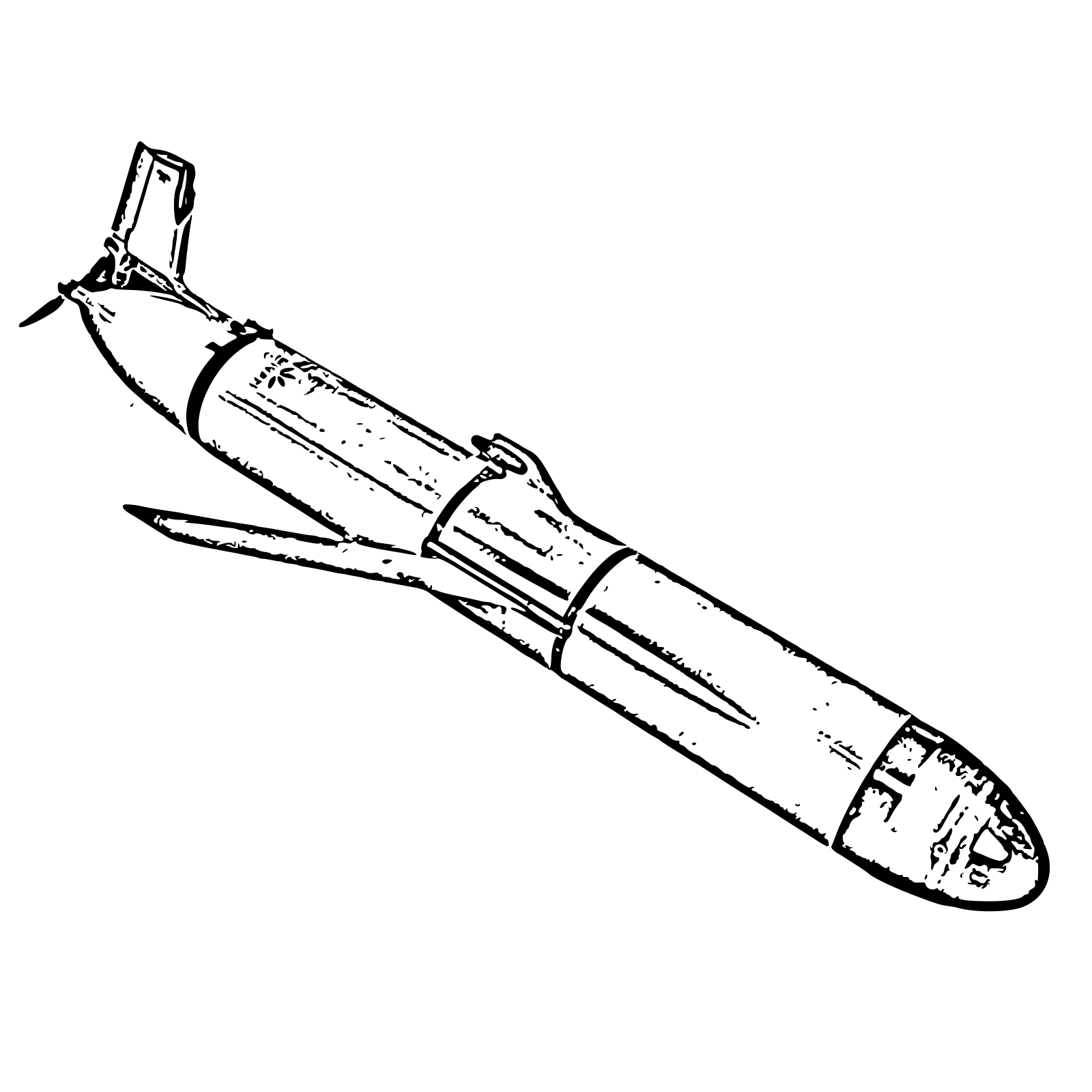
Documentation for Slocum glider hardware components and subsystems.
In This Section
-
Batteries
Charging procedures, storage, safe handling, and capacity tracking.
-
Altimeter
Installation, configuration, altitude settings, and performance verification.
-
Pumps
Installation, configuration, settings, and performance verification.
-
Pitch Vernier
Setting pitch by sliding the battery fore/aft: battpos/setonce/servo modes, the m_battpos sensors, blue Loctite on the mounting screw, and troubleshooting a loose or stuck pitch battery.
-
Tie Rod
What the internal tie rod is, how it opens and closes the glider, torque specs, and field tips.
-
Freewave
The 900 MHz RF modem: master/slave setup, Freewave vs. Iridium, console power saving, and interference troubleshooting.
-
Iridium
The satellite link: RUDICS vs. dial-up, the surface comms sequence, SIM cards and service, testing with callback, and data transfer.
-
Argos
The one-way 401 MHz position beacon: how
c_argos_onactivates it at the surface, its ~90 s transmit cadence as a noise source, service and IDs, message decoding, and testing. -
Fin / Digifin
The self-calibrating tail fin: steering, m_digifin_status bits, leak detect, rudder replacement, and field workarounds for a stuck or noisy fin.
-
Compass / Attitude Sensor
The True North attitude sensor: heading/pitch/roll, magnetic variation, shore calibration with RevolutionTest, the in-situ at-sea cal, the post-cal compass check, and diagnosing heading spirals.
-
Thruster
The optional 10-Watt tail thruster: assisted yos, drift-at-depth, and lens penetration; the four control modes; the energy penalty; in-air checkout, post-deployment care, and troubleshooting.
-
O-Rings
Hull and component seals: G2 single-seal vs G3 double-seal part numbers, approved lubricants and the dry-out problem, inspection and replacement, the sealing-surface scratch debate, and vacuum/leak testing.