Seaglider Recovery Procedure
For field teams and vessel operators
This document covers the two Seaglider recovery methods: a small boat using a cradle, and a large vessel using a rudder lift. It complements the Seaglider Recovery Checklist, which covers the surrounding pilot/field-team timing and post-recovery steps.
Source
Paraphrased from a community Seaglider recovery write-up, including photos from that recovery.
The only lift point on a Seaglider is the rudder
It has two notches designed for a loop of line. Never lift the glider by the antenna mast, sensors, or anything else — the antenna mast is for control and guidance only, not for taking the glider's weight.
In both methods, the pilot gives the recovery command in time for the glider to already be waiting at the surface when the boat arrives, and the boat approaches with the current pushing it away from the glider, never onto it.
Small Boat (Cradle)
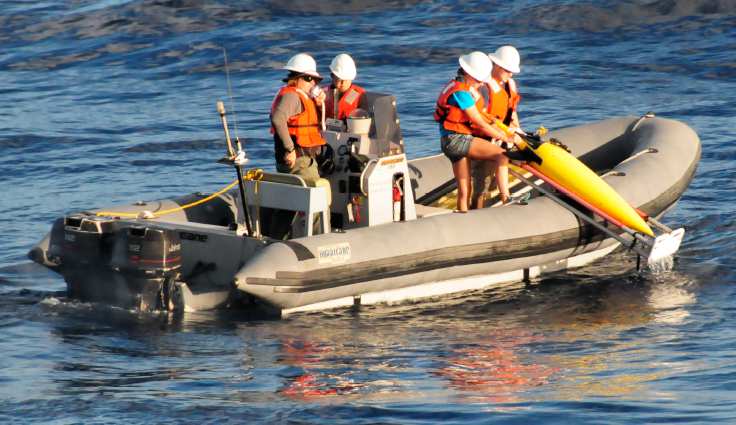
- Position the boat alongside the glider, current pushing away from it.
- Take control of the glider by grabbing the antenna mast.
- With the glider under control, a second person dunks the cradle vertically next to the boat.
- Position the glider on top of the cradle, CT sail facing away from the boat, rudder hooked over the outside of the cradle's handle.
- Keeping a grip on the glider, pull the cradle out of the water until water starts draining from the nose, and hold that position until it's fully drained.
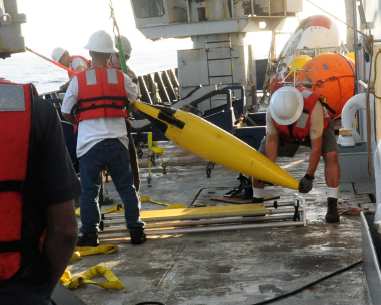
- Bring the cradle aboard and secure it in a safe position.
Large Vessel (Rudder Lift)
- Position the vessel alongside the glider, current pushing away from it.
-
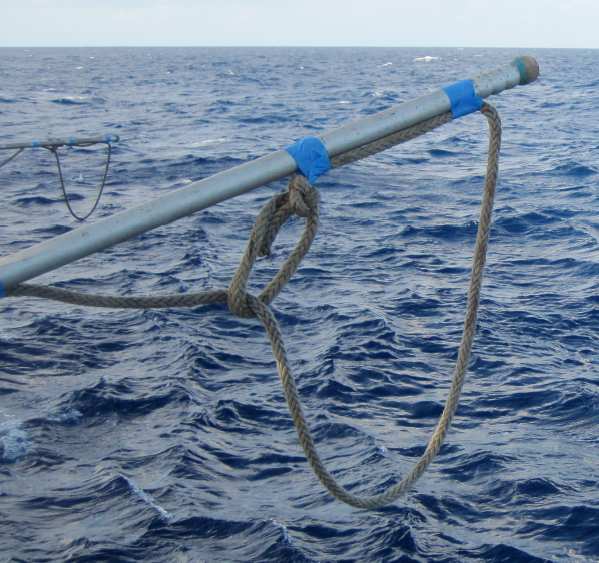
Tape a large loop of line to the end of a long pole.
-
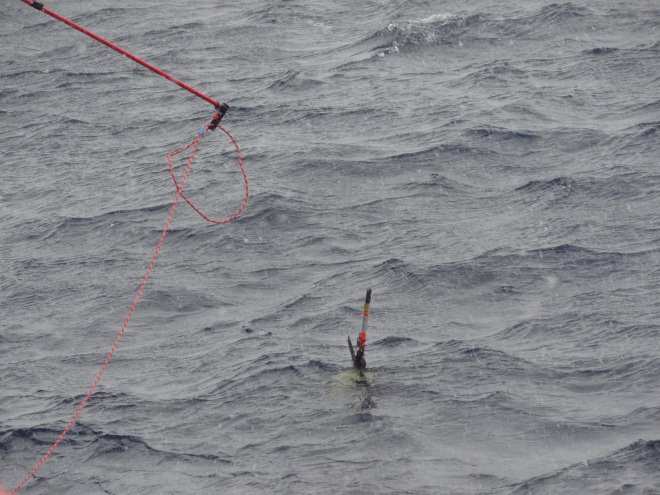
With the glider alongside the ship, work the loop over the antenna and around the underside of the rudder — the rudder notches are the only lift point.
-
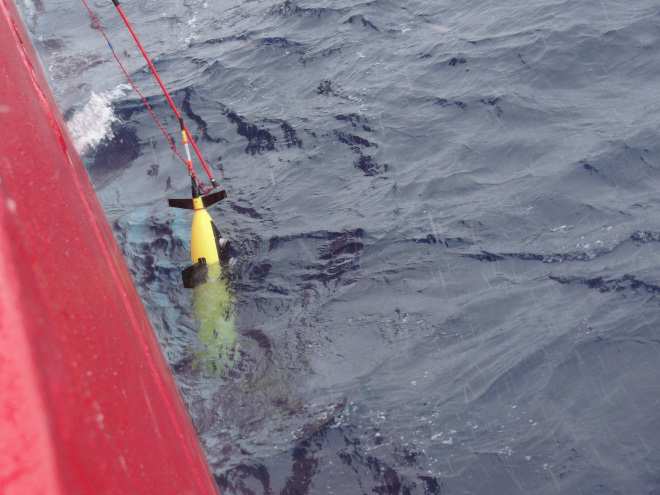
Feed the line through a winch and lift the glider clear of the water, pausing to let it drain before bringing it aboard.
Once Aboard
Move the glider to a secure area of the deck — a cart or cradle, not left where it can roll — before doing anything else.
See the Seaglider Recovery Checklist for inspection, power-down, and post-recovery steps.